- Plaza Calderón de la Barca, s/n | 30800 Lorca, Murcia.
- +34 868 050 061
- +34 628 611 872

What Exactly Is an MP5 FRT and How Does It Differ From a Standard Trigger?
L’evoluzione del cloud gaming nell’iGaming: infrastrutture server, slot‑machine e bonus in un mercato in rapida trasformazione
agosto 25, 2026Maximize your winnings: understanding payment options at online casinos
agosto 25, 2026Understanding the MP5 FRT: A Complete Guide to Function, Legality, and Compatibility
What if you could dramatically increase your MP5’s rate of fire without sacrificing its legendary reliability? The MP5 FRT (forced reset trigger) is a drop-in trigger system that harnesses the weapon’s recoil energy to mechanically reset the trigger, enabling a burst-like firing rhythm with a single pull. Its genius lies in the forced reset mechanism, which physically pushes the trigger forward after each shot, allowing you to maintain a sustained, rapid cadence while keeping full manual control over every round. Install it in minutes with no permanent modification, and you unlock a shooting experience that feels like full-auto but stays legally and mechanically semi-automatic.

What Exactly Is an MP5 FRT and How Does It Differ From a Standard Trigger?
An MP5 FRT, or forced reset trigger, is a drop-in replacement mechanism that uses the bolt’s forward motion to physically reset the trigger sear, enabling a firing cycle that mimics full-auto speed—typically 700–900 rounds per minute—while remaining a semi-automatic action. In contrast, a standard MP5 trigger relies on spring tension alone to reset the sear after each pull, capping practical speed at your manual finger speed (roughly 100–200 rpm). The FRT’s internal cam and lever interface with the bolt carrier, converting its reciprocating energy into a mechanical reset that occurs *before* the shooter fully releases the trigger, creating a burst-like cadence. This means you must maintain constant rearward pressure, whereas a standard trigger requires a deliberate release and re-press. The FRT also alters the trigger’s tactile feel—shorter, sharper, and with a distinct “bump” at the reset point. Q: Does the FRT change the MP5’s internal geometry? A: No—it’s rare breed triggers in stock a swap-in unit using factory holes and pins, but it requires a specific bolt carrier profile to engage the reset arm. Practically, the FRT gives you faster follow-up shots without modifying the receiver, but it demands disciplined grip pressure to avoid hammer follow.
Defining the Forced Reset Trigger Mechanism in Plain Terms
A forced reset trigger mechanism for the MP5 uses the bolt’s rearward travel to physically push the trigger forward back to its resting position, thereby resetting it without the shooter releasing finger pressure. In a standard trigger, the sear re-engages only after the shooter manually lets the trigger move forward; an FRT instead harnesses the recoil energy to do this automatically. This means the trigger returns to the “ready” point mid-cycle, allowing a second shot as soon as the bolt chambers the next round. The shooter’s finger stays still, yet the trigger resets itself, producing a rapid, controlled fire rate.
An MP5 forced reset trigger uses bolt movement to push the trigger forward for automatic reset, enabling faster follow-up shots without finger release.
Key Differences Between a Traditional Trigger and a FRT System
A traditional MP5 trigger uses a single sear surface to release the hammer once per trigger pull, requiring a full reset for each subsequent shot. An FRT system replaces this with a multi-stage sear and a spring-loaded trip bar that physically cycles with the bolt carrier. The key operational distinction is that an FRT uses the bolt’s rearward motion to re-cock the hammer while simultaneously releasing it again during the forward stroke, enabling a forced reset without a finger release. A traditional trigger’s hammer is fully captive until the shooter manually resets; an FRT’s hammer is pushed back into a wot trigger catch that slips automatically when the bolt returns. This changes the trigger pull feel, reset length, and shot timing. Forced-reset trigger mechanics alter the linear pull-reset-pull sequence into a continuous cyclic motion.
- Traditional: pull → hammer falls → release trigger → sear re-engages → pull again.
- FRT: pull → hammer falls → bolt cycles → trip bar forces hammer down → sear slips → hammer falls again without full finger release.
Why Shooters Choose This Trigger Setup for Their Platform
Shooters choose this trigger setup for their platform because the forced-reset mechanism mimics a binary-like cadence while retaining a single trigger pull per reset cycle, drastically increasing shot-to-shot speed without altering the MP5’s original roller-delayed action. This setup lets them exploit the platform’s low recoil impulse for fast, controlled follow-up shots in practical drills or competitive stages, where a standard trigger’s longer reset becomes a bottleneck. The real advantage is that it preserves the two-position safety and sear geometry, so the shooter’s manual of arms stays unchanged. A crisp, short reset with a positive wall at the reset point eliminates the mushy, vague feel of OEM internals, giving consistent trigger discipline under rapid fire.

- Tighter split times from the forced reset, without needing a binary trigger’s complicated training.
- Retains full-auto-style control through a manual pull, making it ideal for shooters who prefer semiauto reliability.
- Direct drop-in compatibility with standard MP5 hammer packs, avoiding gunsmith fitting or permanent modifications.
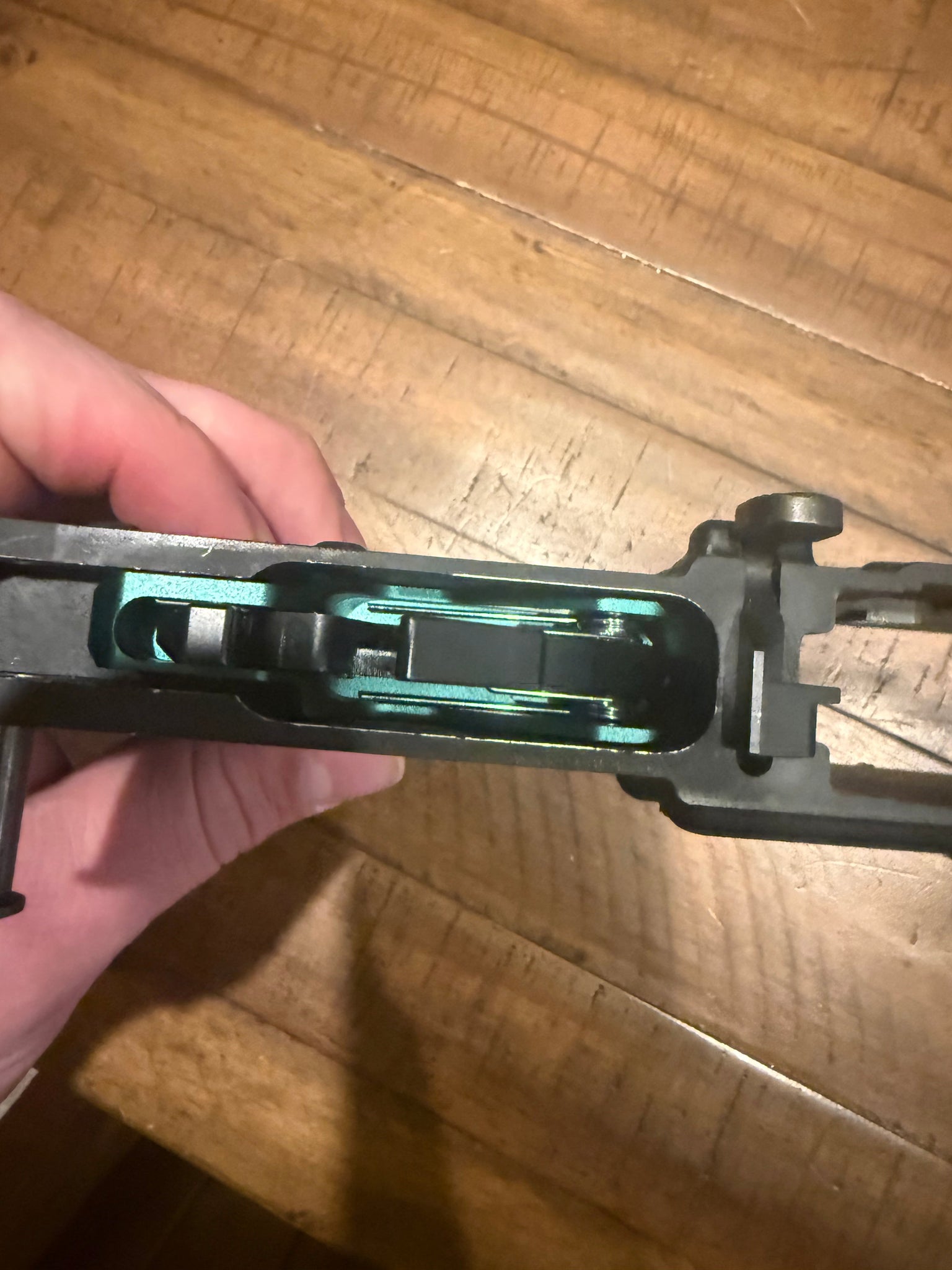
How Does the MP5 FRT Work Mechanically Step by Step?
The MP5 FRT (forced reset trigger) mechanically functions by converting the bolt’s rearward travel into a positive, mechanical trigger reset, rather than relying on a shooter’s finger. Step one: the hammer falls and the bolt carrier recoils, compressing the recoil spring. Step two: as the bolt moves rearward, a cam or trip lug on the carrier engages the trigger’s reset lever, physically pushing the trigger forward into its “ready” position before the bolt returns to battery. Step three: the bolt then rebounds forward, stripping a new round, and as it closes, the carrier’s forward motion releases the reset lever, allowing the trigger to be pulled again—but only after the bolt https://rarebreedtriggertx.com/ has fully cycled. This creates a fixed, consistent cycling rate. The key insight:
the FRT’s timing is locked to the bolt’s physical stroke, meaning the trigger cannot fire out of battery or during the return phase, making it mechanically safe and reliable.
Each pull after the first is initiated by the shooter, but the reset is entirely driven by the carrier’s reciprocating mass, not spring-loaded trigger parts alone.
Understanding the Reset Cycle and How It Creates Faster Follow-Up Shots
The reset cycle in an MP5 FRT is the critical window where the trigger’s internal sear re-engages the hammer while the bolt is still moving forward. Unlike a standard trigger, the FRT’s trip lever holds the hammer back until the bolt is nearly closed, then releases it just before lockup. This timing eliminates the need for a full finger release; the shooter only needs to reduce pressure enough for the trigger to reset, which occurs mid-cycle. Because the hammer fall happens during the last millimeters of bolt travel, the next shot fires almost immediately after the bolt chambers the round, reducing perceived recoil anticipation. The result is a dramatic shortening of the time between shots, as the mechanical sequence overlaps the bolt’s return with the trigger’s re-engagement, creating a rapid, controllable follow-up cadence.
The Role of the Bolt Carrier Group in the Forced Reset Function
The bolt carrier group (BCG) is the central component in the MP5 forced reset trigger (FRT) function, as its rearward travel after firing physically pushes the trigger forward, resetting the sear without shooter input. In an MP5 FRT conversion, the BCG’s trip lug or modified cam surface strikes a lever or ramp integrated into the trigger pack, transferring kinetic energy from the recoiling mass to the trigger. This forced reset timing depends on the BCG’s weight and travel distance; if the carrier is too heavy or the spring rate mismatched, the reset occurs too late, causing hammer follow or bolt bounce. Conversely, a light BCG resets too early, breaking the firing sequence. The MP5’s roller-delayed system means the BCG unlocks slowly, providing a consistent, repeatable impulse for the forced reset—unlike gas systems where carrier speed varies. Proper lubrication of the BCG rails is critical, as friction alters the reset point. A worn BCG or incorrect bolt gap will disrupt the mechanical linkage, making the FRT unreliable or unsafe.
Q: What happens if the bolt carrier group is modified for an MP5 FRT?
A: Any alteration to the BCG’s mass, cam surface, or trip lug changes the forced reset timing, leading to malfunctions like double fires or trigger reset failure. Only use a factory-spec BCG with the FRT kit.
What Happens to Trigger Pull Weight and Feel During Rapid Fire

During rapid fire with an MP5 FRT, the trigger pull weight remains constant at the sear’s mechanical break point, but the perceived feel changes dramatically because the trigger resets almost immediately after each shot. The shooter does not fully release the trigger; instead, they maintain a slight forward pressure, feeling a distinct, short “click” as the sear re-engages. This reset is crisp and short, occurring within a fraction of the total trigger travel, which allows for a faster finger rhythm. The initial single-shot pull weight is heavier, but during rapid fire trigger reset, the perceived resistance drops because the hammer is already cocked, requiring only sear movement, not hammer compression.
- The trigger’s tactile reset point is shorter than the initial pull, reducing finger travel between shots.
- Each reset produces a lighter, snappier feel compared to the first trigger break from a full release.
- Consistent pull weight prevents accidental doubles, but the rapid reset allows for a controlled burst rhythm.
- Over-travel is minimal, so the finger stays in a constant contact zone, enhancing speed without extra force.
What Are the Practical Benefits of Installing This Trigger System?
For the MP5 platform, installing an FRT trigger system delivers the most tangible benefit of dramatically increasing your cyclic rate without altering the firearm’s external profile. This means your finger moves faster than the gun’s bolt, producing a rapid, controlled burst that mimics full-auto feel while retaining semi-auto legality. Practically, you gain **faster target reacquisition** during drills, as the short reset and aggressive sear trip allow you to keep your sights pinned on target through sustained fire. The system also reduces trigger finger fatigue during long range sessions, because the mechanism does most of the work—you only maintain pressure, not heavy pulls. For competitive shooters or defensive trainers, this translates to **higher rounds-on-target per second** with minimal training curve, letting you exploit the MP5’s low recoil to stack hits with unmatched speed.
Improving Your Split Times Without Changing Your Grip or Stance
The real win with an MP5 FRT is that it lets you shave your split times without touching your grip or stance. Since the trigger resets faster than your finger can naturally return, you keep your support hand pressure and shoulder weld completely locked in. That stability is everything—no re-gripping or adjusting your feet between shots. To get the fastest splits, focus on a crisp, short finger pull and let the mechanism handle the reset; then immediately prep the next trigger press as the bolt cycles. Finally, practice slow, controlled pairs to build muscle memory for that consistent rhythm.
How It Enhances Control and Accuracy During Sustained Fire
The forced-reset trigger system in the MP5 drastically tightens shot-to-shot consistency during sustained fire, as the trigger’s reset mechanism keeps your finger in a fixed, predictable travel path. This eliminates the erratic yanking common with standard triggers, allowing you to maintain a stable support hand grip and cheek weld without fighting muzzle climb. Because the reset is short and deliberate, you can time each shot to your natural breathing rhythm, reducing uncontrolled burst dispersion. The result is superior sustained-fire accuracy, where your point of impact stays within a tight group even when dumping rounds, giving you the confidence to keep the weapon on target without losing sight alignment.
Compatibility With Your Existing Lower Receiver and Safety Selector
The MP5 FRT drop-in trigger is engineered to interface directly with your existing mil-spec lower receiver, requiring no permanent modification or receiver replacement. This direct-fit design preserves your firearm’s original serialized component, maintaining legal and practical continuity. The trigger’s housing matches the standard FCG pocket dimensions, so installation is genuinely plug-and-play. Your factory safety selector remains fully functional, retaining its familiar three-position travel for safe, semi-auto, and binary-style forced reset fire. Because the FRT does not rely on proprietary selector geometry, you can swap between your stock trigger and the FRT without changing pins, springs, or levers. This ensures that your lower’s durability, ergonomics, and grip angle stay exactly as configured, while the trigger pack alone delivers the accelerated reset function.
How to Properly Install and Adjust the Forced Reset Trigger for Your Gun
For your MP5 FRT, start by ensuring the lower receiver is completely stripped and the hammer is decocked. Drop the FRT unit into the trigger pocket, aligning the pivot pins precisely—do not force it, as the ps90 frt trigger MP5’s housing is tight. Install the trigger housing and retaining pins, then check the sear engagement: the FRT’s reset lever must sit flush against the bolt carrier’s ramp. Adjust the over-travel screw (if present) so the trigger releases instantly after the bolt returns, but leave a hair of play to prevent slam-fires. Test the reset function by cycling the charging handle slowly—if the trigger doesn’t “click” back into position, back out the adjustment screw one-quarter turn.
The key is tuning the reset spring tension so the trigger re-engages only when the bolt fully closes, otherwise you’ll get short strokes.
Finally, function-check with snap caps: the trigger should reset with an audible click after each simulated shot, and the hammer must follow the bolt forward without dragging. Reassemble and verify that the safety selector still rotates freely through all positions.

Tools You Will Need and Step-by-Step Installation Walkthrough
To install the MP5 FRT, you need a 3/32-inch punch, a non-marring hammer, and a bench block to protect the receiver. Begin by removing the end cap and pulling the trigger pack downward. Drift out the original trigger axis pin using the punch, then lift the standard trigger out. Insert the forced reset trigger, aligning it squarely with the housing’s slots. Reinstall the axis pin, ensuring it seats fully through both sides of the pack. Reseat the pack into the receiver and tap the end cap back. Finally, function-check the trigger’s reset by cycling the charging handle slowly; the hammer must re-engage crisply. Proper pin alignment is critical to avoid binding.
Q: What’s the most common mistake during the MP5 FRT installation walkthrough?
A: Failing to fully depress the hammer before inserting the axis pin, which causes the trigger to stick. Always verify the hammer sits forward against the bolt carrier.
Mark the trigger pack orientation before disassembly to avoid reversing the spring tension during reinstallation.
Adjusting Spring Tension and Reset Force for Reliable Function
For the MP5 FRT, reset force tuning begins with the trigger housing’s spring set, not the hammer spring. Start with the factory recoil spring in the trigger pack; if the bolt fails to reset the trigger shoe, reduce tension by swapping to a lighter trigger return spring (e.g., 3.5 lb instead of 5 lb). Conversely, if you get hammer follow or premature reset, increase tension one step. Always test with the upper receiver closed, as the bolt’s forward momentum assists reset. Lubricate the sear engagement points with a thin grease to prevent friction-induced drag. Use a snap cap for dry-fire cycling: the trigger should click audibly and the shoe must return fully forward before the bolt closes. If it sticks, polish the trigger bar’s contact surface, not the sear.
Q: How do I know if my reset force is too low or too high?
If the trigger stays rearward after firing, force is too low—raise spring tension. If the bolt binds or the trigger fires before the bolt fully locks, force is too high—reduce spring weight.
Common Installation Mistakes That Cause Misfeeds or Double-Fires
Misfeeds and double-fires from an MP5 FRT almost always trace to specific install errors. A forced reset trigger double-fire commonly stems from an over-tightened trigger pack screw, which warps the housing and misaligns the hammer sear engagement surface, causing the hammer to slip prematurely. Conversely, an under-torqued selector axis nut allows lateral play, letting the trigger trip lever skip past the reset cam and fire twice per trigger pull. Using the incorrect hammer spring (too light) fails to return the hammer with enough force to reset the FRT mechanism before the bolt closes, producing a misfeed. Furthermore, failing to seat the trigger pack’s rear retaining pin fully leaves the pack angled, which changes the trigger bar’s drop angle into the lower receiver, causing intermittent double-fire. Always torque fasteners to spec and verify pin flushness first.
What Should You Know About Maintenance and Troubleshooting This Trigger?

For the MP5 FRT, maintenance and troubleshooting this trigger hinges on lubrication and spring tension. The forced-reset sear and carrier trip require a thin, high-quality grease applied to the hammer pivot and trip interface every 300–500 rounds; dry operation causes sluggish resets or hammer-follow. If you experience double-fire or failure to reset, first strip the lower and inspect the trigger pack’s captive springs for kinks or fatigue—replacing a worn FRT spring is the most common fix. Also verify the carrier’s trip ledge isn’t peened; if it is, lightly stone it flat. When the trigger feels gritty, do not sand any surfaces—flush with solvent, re-oil, and cycle the bolt by hand to confirm the sear trips crisply. For persistent malfunctions, test with the original MP5 hammer spring; aftermarket heavier springs often disrupt the FRT sequence. Keep the trigger pack clean of carbon buildup around the trip slot, and your mechanism will remain reliable.
How Often to Clean and Lubricate the Trigger Group for Smooth Cycling
For an MP5 FRT, the trigger group demands attention every 300–500 rounds to maintain reliable reset and cycling. Dry carbon fouling from the roller-delayed action accelerates friction on the sear and trip lever, so clean and lubricate after each range session if you shoot beyond 200 rounds. A precise routine: field-strip the lower, spray with CLP to dissolve residues, then brush the hammer pivot and sear engagement surfaces with a nylon brush. Apply one drop of lightweight grease (e.g., TW25B) to the sear nose, hammer rails, and trigger bar contact points—avoid oil on the trip spring, as viscosity slows return. Reassemble and function-check with snap caps. If the FRT halts or doubles unexpectedly, clean immediately; do not wait for a round count, as debris causes sluggish cycling that compounds wear.
Identifying Signs of Wear on the Reset Cam and Disconnector
When inspecting your MP5 FRT, identifying signs of wear on the reset cam and disconnector starts with feeling for hesitation in the trigger reset—a spongy or delayed click signals friction or peening on the cam’s engagement surface. Visually, remove the trigger pack and look for a shiny, burnished flat spot on the disconnector’s nose, where it contacts the hammer, or a rounded, polished edge on the reset cam’s ramp instead of a crisp, angular profile. Tiny metallic flakes or a gritty feel when cycling the bolt are red flags. Also check for vertical play in the disconnector; excessive movement indicates the pivot hole has elongated, altering timing. If the trigger fails to reset unless the bolt is slammed hard, the cam’s rear lobe is likely worn. Address these by replacing the affected parts before function degrades.
Fixing Light Primer Strikes and Inconsistent Reset Timing
When your MP5 FRT starts showing **light primer strikes and inconsistent reset timing**, the first thing to check is the hammer spring—a weak or worn one directly kills both. Swap in a fresh, factory-spec spring before touching anything else. Next, clean the trigger pack’s sear surfaces and the hammer pivot; carbon buildup there slows the reset and reduces strike force. Also verify your bolt gap and buffer—if the carrier short-strokes, it won’t reset the trigger fully, causing that mushy, unpredictable feel. Finally, ensure the trigger pack screws are torqued evenly; a loose pack shifts geometry and ruins timing.
Q: Can I fix light primer strikes and inconsistent reset timing without replacing parts?
A: Usually, yes. Deep-clean the hammer channel and sear, then lightly grease the pivot. If the issue persists, the spring is likely fatigued, so replace it.
Frequently Asked Questions About This Trigger System From New Users
New users of an MP5 FRT trigger system almost always ask the same handful of things before their first range trip. The biggest question is whether it drops into a standard MP5 clone or roller-delayed host without gunsmithing—most aftermarket units require a modified hammer or sear trip, so check your specific brand’s compatibility list. Second, folks ask about break-in: expect 200–300 rounds of stiff, gritty pulls before the reset feels crisp and the binary-like bump settles into a consistent rhythm. Another common one is ammo sensitivity—light primer strikes happen with hard military primers, so run 115–124 grain brass initially. Finally, users want to know if it’s safe to dry-fire with a snap cap; yes, but the FRT’s internal springs wear faster than a standard trigger, so limit practice pulls to avoid premature reset failure.
Always test with a full magazine before relying on the trigger for a course, because the FRT needs rearward bolt pressure to trip the reset properly—short-stroking will cause dead triggers.
If you’re still fighting double-fire or hammer follow, clean the trigger pocket and check your ejector spring tension before blaming the unit itself.
Is It Safe for Everyday Range Use and Continuous Shooting Sessions?
For everyday range use and continuous shooting sessions, the MP5 FRT system holds up well if you keep it reasonably clean and lubed. Heat buildup is your main concern during rapid fire, so check the trigger pack’s contact points after a few hundred rounds—if they feel gritty, you’re pushing it too hard without maintenance. The roller-delayed action soaks up recoil, which reduces parts stress, but the forced reset cam can wear faster if you ride the trigger instead of letting it slap back. *It’s fine for a standard hour-long session, but don’t expect it to run like a belt-fed if you’re mag-dumping back-to-back without a pause.* Just bring a small brush and a drop of oil, and you’ll avoid most hiccups.
Will It Work With Different Ammunition Types and Bullet Weights?
Most new users wonder if their trigger will hiccup when they switch from 115-grain range ammo to heavier 124-grain mp5 frt trigger or 147-grain subsonic loads. With ammunition type compatibility, the system generally runs fine across these common 9mm weights, but the recoil impulse changes slightly. Lighter bullets produce sharper, snappier cycling, which can feel more aggressive; heavier subsonic rounds often run smoother and may reduce felt reset speed. The main variable isn’t the bullet itself—it’s the power factor and whether your bolt carrier group is properly lubricated and broken in. Steel-case or weaker reloads might fail to reset the trigger fully due to insufficient gas, so stick to quality factory loads until you’ve tested a few brands.
In short: the trigger works with most 9mm bullet weights, but test your specific loads to confirm reliable reset and cycling.
What Is the Break-In Period and Expected Lifespan of the Components?
Most MP5 FRT triggers need a break-in period of 200 to 500 rounds before the sear and trip surfaces wear into each other smoothly—expect some light primer strikes or occasional hiccups early, especially with heavier hammer springs. After that, the steel components typically last 15,000 to 20,000 rounds, though the hammer spring and trigger return spring are the first to fatigue and should be swapped around 10,000 rounds. The trip lever wears faster in full-auto hosts, so inspect it every 5,000 rounds for peening. Replace worn springs to avoid light strikes; the housing itself is nearly immortal.
Break-in is 200–500 rounds, springs need replacing around 10k, and core steel parts frt 15 trigger last 15–20k rounds with regular inspection.
